


I make $100,000 every year from affiliate marketing (seriously). I constantly have people asking for my links to products before they buy. And no, in no way am I an “influencer”. I don’t sell makeup, kitchen gadgets, or clothes either. I am a wedding invitation designer, and I teach other people how to start a stationery business. And as part of that business…I also make a ton of money from affiliate marketing.
So if you feel like you have to be skeevy or fake to make money in affiliate sales, or that you have to be a lifestyle influencer for this to work – I’m here to tell you you’re wrong. I’ll tell you what works specifically for artists and designers when it comes to affiliate marketing! If you’re wondering how to get started in affiliate marketing, you’re in the right place.
Getting Started in Affiliate Marketing
The easiest sales are those that your audience is already asking for. Something probably comes to mind when I say this – what are the comments on your posts asking? What supplies are people begging for? What are people repeating over and over and over again? Let’s start there!
If your audience is already asking for something, then you basically know you can sell it. See if you can reach out to the brand directly to set up a referral relationship. If not, then you might be able to set one up through a seller. As an example, for art supplies, both Blick Art Materials and Amazon have affiliate programs. If you have a certain pencil you love and the company doesn’t have their own affiliate program, you can earn money by directing people to purchase that pencil through Blick or Amazon.
You’re likely leaving a lot of affiliate money on the table already – most artists and designers I know are! If there’s not something really obvious that people are asking for, then go with what you use and love the most. What’s one tool your work wouldn’t be complete without? That is a great place to start because you can talk about it authentically!
Compilations + Landing Pages
People love options! A compilation like your Amazon storefront (watch this easy Amazon Affiliate class on YouTube!) or even a Google Doc with your favorite supplies and tools will get you tons of clicks! It doesn’t look like you’re being partial to one supply or brand (I’d recommend sprinkling in some NOT affiliate links to help you remain truly unbiased). These are easy things to link to and give people different ways to pay you – if someone asks what pencil you used, say “It’s in my favorites list linked in bio!” and then maybe they’ll buy that pencil, but maybe they’ll also buy something else instead (or also).
Show How it Works
I mentioned that I teach people how to design. Showing how the thing works is the number one way I make affiliate revenue. I assume that people already want the thing I’m sharing, and just give a tutorial on it. For me, this will often be software. So I’ll show them how to do a cool thing with said software, and then they’ll want to buy it. I don’t even really have to sell the software at all.
Make them Click NOW
One thing that will increase conversions dramatically for your affiliate marketing is working with programs where there’s an incentive for the person to click now. You could create this incentive (ie: anyone who buys this class will get my free supplies download with it!) but you can also get the company to offer something (ie: 10% off with code LANEY). I would rather get 15% commission on a sale and the user gets 10% off than I get 25% and the user gets nothing.
I will make significantly more in the long run if I give the user something to incentive clicking, looking at the sales page, adding to cart, signing up, etc. NOW vs. thinking “oh that’s cool, I’ll come back to it.” Remember – in affiliate sales, they have to use YOUR link. If you make a video that convinces a million people to buy a certain pencil, but they don’t use your link…you lost out on a million sales.
Talk Negative About It
Authenticity will set you apart from anyone else – so be up front and don’t be afraid to be real. Softwares have issues. Products have shortcomings. There are people who don’t like the color blue, or aren’t right-handed, or don’t use a Mac, and none of those things are really “bad” but they will preclude you from buying some things. So if you can say “Hey, the pros are X and the cons are Y” then you’ll seem more authentic, people will trust you more, and I PROMISE, people will still buy the product. Especially if the negatives are just preference-based (“If you’re more into acrylics you probably won’t like these watercolors”).
Compare and Contrast
Similarly, you can compare and contrast products – “Comparing Holbein vs. Winsor and Newton Gouache” for instance. A lot of people probably read this and assume you have to highlight the “winner” as the product you’re an affiliate for – but what if you’re an affiliate for both? You can see the merits in both Holbein and Winsor and Newton Gouache without being a liar. You can discuss paper differences without being a scam artist.
Chances are, you like different supplies for different types of projects, so just tell people that. The people who are working on a project better suited to Paper A will buy Paper A, and the people who are working on a B-type project will buy Paper B. You’ll get paid from both, and most importantly: both will have found your content helpful because you helped them end up with the right product for them. So much of affiliate marketing is not selling, it’s just sharing the info about the product and letting someone else decide if they need it.
People always assume that you have to be totally positive or stick to one type of product to sell it well. But if you ignore any reason why someone would not like that product, then you’re missing out on a ton of opportunities. So when you’re reviewing a product, think “Why would someone like this?” but also think “Why might someone prefer something else?”
Track Your Results
The one thing I see almost every affiliate struggling with is tracking results. And that’s because it’s hard. Every program has a different dashboard, gives you different info, pays out on different terms and timelines – it’s a nightmare. But this is costing you money.
Not tracking your results is the difference between thinking of affiliate marketing as just a random streak of luck you get sometimes and making it an actual strategy – this is how I make $100,000 every year, consistently, from affiliate marketing. Because I know my numbers and I know how to make changes that affect those numbers. Luckily, there are usually only 2 numbers you have to track: Clicks and Conversions. You may be able to access people who add to cart, start a free trial, or maybe join for a month and cancel before your payment vests, which can make it a little more complex. But knowing how to increase clicks and conversions will make ALL the difference.
I’ll share my tracking spreadsheet with you inside Clicks to Ca$h, our affiliate marketing program, as well as all the other secrets about how to improve your results, pick the *most profitable* programs, and create engaging (never sleazy) evergreen content that will keep the money rolling in all year.
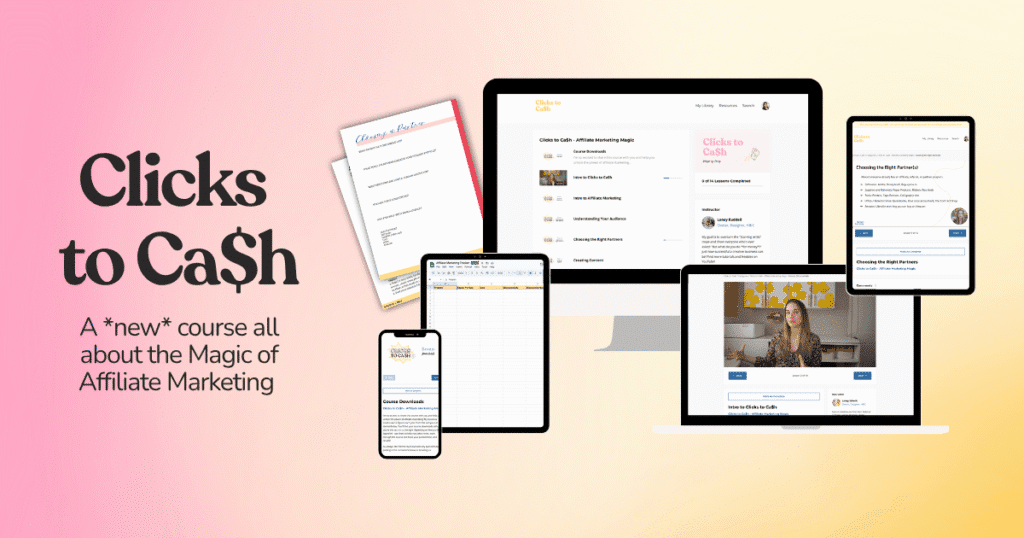
If it’s time for you to start affiliate marketing, you’ll make some easy sales with the tips in this article, but Clicks to Ca$h will help you get from generating a little fun money to creating reliable, consistent income.


Behind the scenes with your favorite Stationery Auntie Laney (and all the inside scoops!)


